

No products in the cart.

No products in the cart.

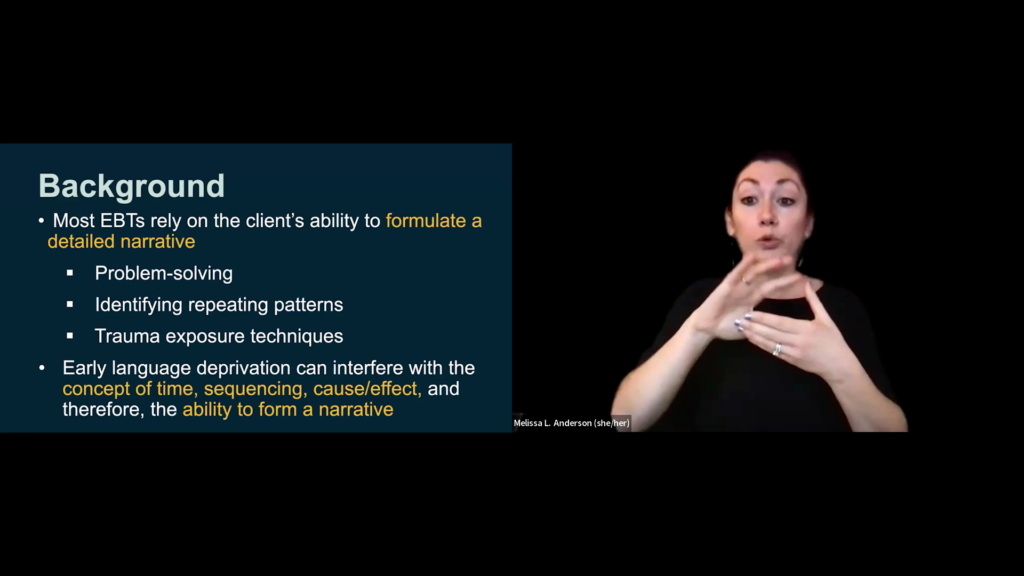
split-screen presentation slide titled "Background," which states that early language deprivation can interfere with the concepts of time, sequencing, and cause and effect, ultimately hindering a client's ability to form the detailed narratives required by most evidence-based treatments (EBTs). On the right side of the screen, a presenter named Melissa L. Anderson is shown signing in American Sign Language against a black background.

Signs of Safety: A Deaf-Accessible Therapy Toolkit for Trauma and Addiction

Presented By: Chris Bruce, M.A., Vonessa Costa, CORECHI-P™, Sheryl Emery, M.A., Ashley R. Walker, PharmD, and Corey Axelrod, MBA (Moderator)

Course Duration: 1.25 hours


Subscription: 6 Months


CEU Credits: .125 PS

Signs of Safety: A Deaf-Accessible Therapy Toolkit for Trauma and Addiction

Price range: $24.99 through $29.99

Course Description & Objectives

Deaf sign language users in the United States experience nearly triple the rate of lifetime problem drinking and twice the rate of trauma exposure compared to the general population. Although there are several treatments for alcohol use disorder (AUD) and posttraumatic stress disorder (PTSD) in hearing populations, none have been developed for or tested with Deaf clients. Behavioral health treatments available for hearing individuals often fail to meet Deaf clients’ unique cultural and language access needs.

Leveraging extensive community engagement to address these barriers, our team of Deaf and hearing researchers, clinicians, filmmakers, actors, artists, and Deaf people with AUD/PTSD developed and pilot tested Signs of Safety, a Deaf-accessible toolkit to be used with the Seeking Safety cognitive-behavioral treatment protocol. During this 75-minute presentation, we will describe our intervention development process, show examples from the Signs of Safety toolkit, and share concrete ways that audience members can learn more about the Signs of Safety treatment approach and/or become involved in ongoing clinical research.

Upon completion of this session, participants will be able to:
  • Understand the distinction between the Seeking Safety therapy approach and the Signs of Safety Deaf-accessible therapy toolkit.
  • Identify the basic structure of a Seeking Safety therapy session and how to use the Signs of Safety toolkit within this format.
  • Know where and how to access resources about Seeking Safety and Signs of Safety, including opportunities to support ongoing clinical trials research.

Meet Your Instructors

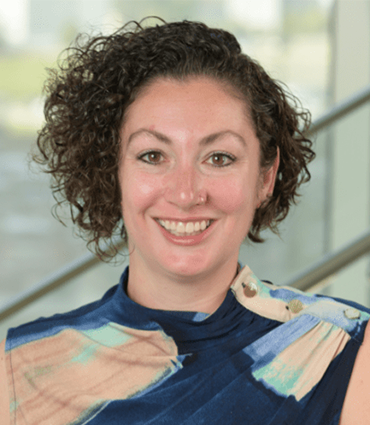
Melissa L. Anderson, PhD, MSCI headshot.
Melissa L. Anderson, PhD, MSCI

Melissa is a Gallaudet-trained psychologist and clinical researcher who strives to provide accessible behavioral healthcare to members of the U.S. Deaf community. She founded DeafYES at UMass Chan Medical School in 2014, where she has continually provided outpatient therapy and conducted research on Deaf mental health.

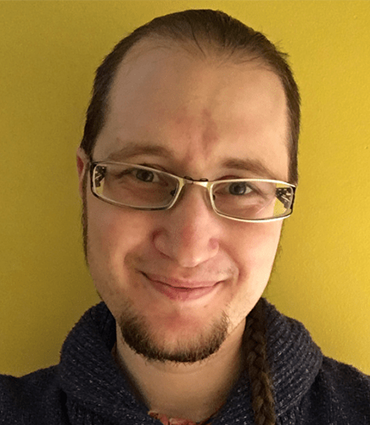
Rhys McGovern, MS, CCC-SLP headshot.
Rhys McGovern, MS, CCC-SLP

Rhys is a hard of hearing speech-language pathologist who lives at the intersection of many communities. Rhys’s work focuses on reducing access barriers for individuals and communities and working toward communication equity for all, and he’s thrilled to be part of the DeafYES team.

Lighthouse Interpreting & Training is an Approved RID CMP Sponsor for Continuing Education Activities.

Enhance Your Expertise

Enroll in our courses today to elevate your engagement skills to the next level.

Additional information

Access Type

DO NOT RECEIVE CEUs, RECEIVE CEUs